
Hitting the Sweet Spot - Balancing Screens with Off-Screen Activities (Screen Time - Part 2)

Even when families follow screen-time guidance, the same question comes up:
“Okay… so what do I do instead?”
That’s where simple, clinician-supported off-screen strategies help bridge the gap between advice and real life.
(Canadian Paediatric Society, 2022)
The most effective supports are practical and flexible. They:
- reduce parent fatigue
- work across ages and energy levels
- include graded movement (heavy work, vestibular input, coordination)
- treat play as a core occupation - not an extra
Most importantly, they reassure families:
Screens can have a place. Just make off-screen the default - and use screens intentionally.
Five Practical Strategies for Families
1. Try the “Screen Sandwich”
Bookend screens with movement to support regulation.
Before:
5–10 minutes of organizing input (wall pushes, animal walks, frog jumps, quick dance).
During:
Short, purposeful screen time with a timer.
After:
A predictable transition to snack, craft, obstacle course, outdoor play, or homework.
This structure prevents screens from taking over and keeps regulation steady.
(AAP, 2016)
2. Protect Sleep First
Evening screen use is strongly linked to delayed melatonin release and poorer sleep quality.
(Hale & Guan, 2015)
Encourage calming alternatives before bed:
- reading
- stretching
- drawing
- quiet conversation
- guided breathing
Sleep protection is often the most impactful first change.
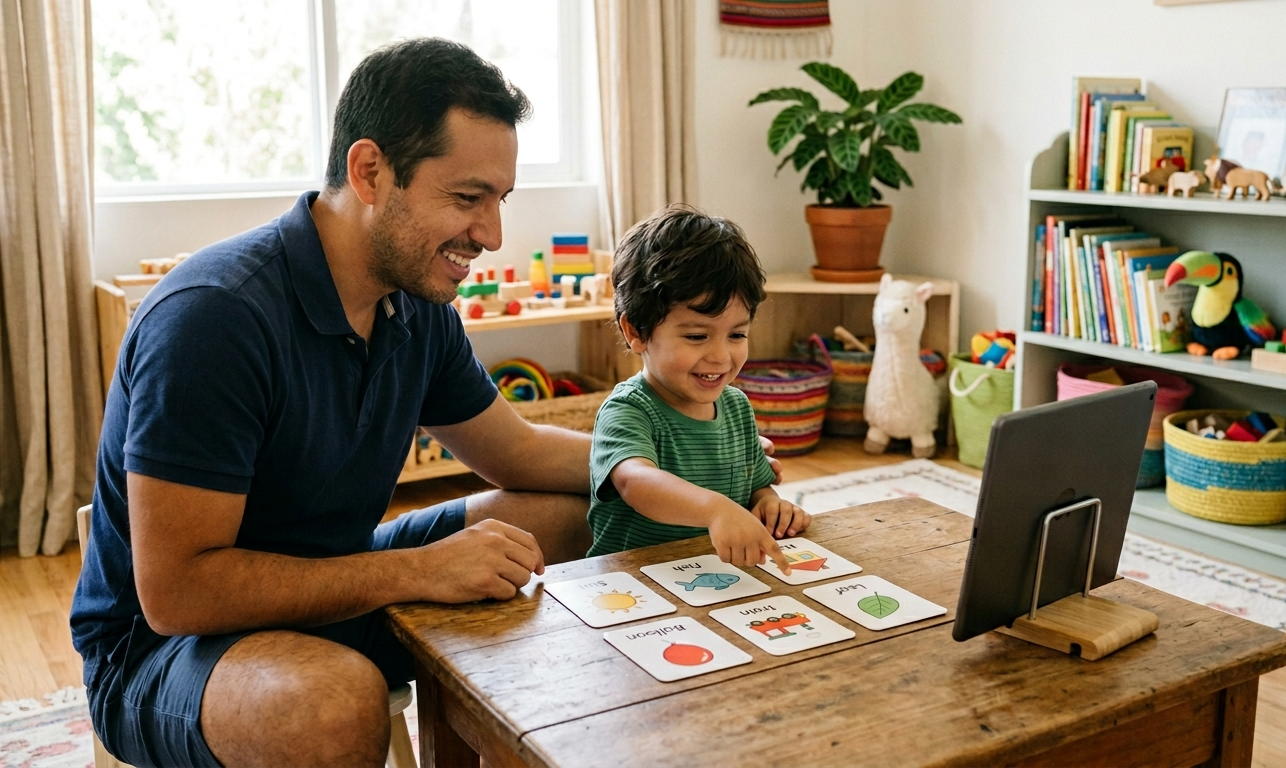
3. Co-View When Possible
Even five minutes of engaged co-viewing improves outcomes.
Sit together, narrate what’s happening, ask questions, and connect it to real life:
“That character jumped high - can you jump like that?”
Co-viewing turns passive watching into active learning.
(Canadian Paediatric Society, 2017)
4. Make Transitions Predictable
Most screen struggles are transition struggles.
Reduce friction with:
- visual timers
- “first/then” boards
- consistent closing routines (“Pause. Breathe. What’s next?”)
Predictability builds trust and smoother shifts.
5. Aim for Moderation, Not Perfection
School-age children generally thrive with:
- ~2 hours of recreational screen time
- At least 60 minutes of daily physical activity
- 9–12 hours of sleep
Focus on weekly patterns rather than occasional off-days.
(Saunders et al., 2016)
Core Screen-Time Principles
When guiding families, emphasize:
- Clear purpose for every screen activity
- Short, child-matched duration
- Adult co-engagement whenever possible
- Planned transitions
- Protection of non-negotiables: movement, outdoor time, play, sleep, and face-to-face connection
(Saunders et al., 2016)
These principles are increasingly supported by modern therapy software and digital tools for therapists, helping clinicians structure both in-person and remote care.
The OT “Recipe” for Guided Screen Time
From an occupational therapy perspective, effective screen use includes:
- A clear occupational goal
- A short, defined dose (often 5–20 minutes)
- Adult co-use with narration and reflection
- Predictable transitions
- Built-in movement or posture breaks
(Canadian Paediatric Society, 2017)
Platforms like the Cognishine platform - a digital intervention platform and online therapy library - can support clinicians with evidence-based therapy activities and structured session ideas that align with these principles.
Why Off-Screen Play Still Leads
Off-screen movement and play are foundational to development.
- Physical play builds:
strength, coordination, balance, body awareness
- Imaginative and social play build:
problem-solving, flexibility, communication, emotional regulation
Protected off-screen time supports sensory regulation, creativity, independence, and stronger family connection. Digital supports - including cognitive rehabilitation tools and multidisciplinary therapy resources - can complement (but not replace) these essential real-world experiences.
A Real-Life Example: Sara’s After-School Reset
Nine-year-old Sara came home overwhelmed after school. Endless scrolling led to meltdowns.
Instead, her family practiced a “screen sandwich”:
Heavy work reset:
10 wall pushes + frog jumps
5-minute guided breathing video:
Watched side-by-side, with soft narration
Predictable transition:
Snack → homework → built-in dance break
The screen became a brief, purposeful reset - not an escape.
Movement anchored the routine.
(Canadian Paediatric Society, 2022)
The Bottom Line
Excess screen time crowds out play, movement, and connection.
Intentional screen use - paired with protected off-screen time - is the post-COVID sweet spot. Shift from: “Limit screens” to “Here’s what happens before, during, and after screens.” Everything in moderation — plus a plan.
About the author
Elaine Wiener, OTR/L is a pediatric occupational therapist with over 25 years of experience working in school-based settings with children in preschool and elementary school, as well as experience with the early intervention population. She has taken numerous courses to deepen her understanding of sensory integration and applied these principles in school practice by intentionally blending on-screen and off-screen activities in the therapy room, while also supporting teachers with strategies they could integrate into the classroom. She currently serves as the U.S. Website Manager and Clinical Business Development Manager at Cognishine, developing practical, accessible resources for families, therapists, and educators.
References
• Canadian Paediatric Society. (2017). Screen time and young children.
• Canadian Paediatric Society. (2022). Screen time and preschool children.
• Saunders et al. (2016). Canadian 24-Hour Movement Guidelines.
• Hale & Guan (2015). Screen time and sleep among school-aged children.
• AAP. (2016). Media and young minds.
