
Navigating the World of Bilingualism: An Interview with Expert Olga Sokorova

In today’s globalized world, more and more children grow up surrounded by two or even more languages. Yet the term bilingualism is still often misunderstood - both by parents and by professionals. Does bilingualism mean speaking two languages equally well? Can it delay speech development? Should families “stick to one language” if a child is struggling?
At Cognishine, we support therapists working in multilingual and multicultural contexts, and these are common questions in their day-to-day practice.
To unpack these questions, we spoke with expert Olga Sokorova about the many forms of bilingualism, common myths, and what speech therapists should keep in mind when working with multilingual children and their families.
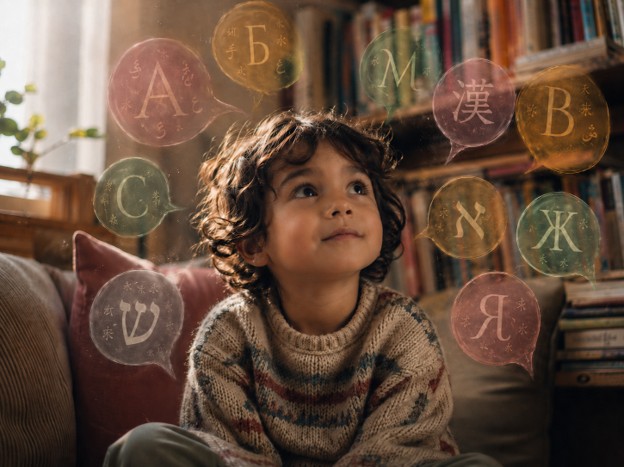
“Bilingualism is not an on/off switch”
Interviewer: Let’s start with the basics. How do we actually define bilingualism? Many people still think it simply means speaking two languages fluently.
Olga: That’s probably one of the most common misconceptions. In reality, bilingualism is not a binary state - it’s a spectrum. There isn’t one single perfect definition that everyone agrees on, because bilingualism is always shaped by the person’s linguistic environment and life experience.
For example, someone may speak one language confidently but only understand the other. That is still a form of bilingualism. In many cases, what we see is unbalanced bilingualism, where one language is stronger, more active, or used in a wider range of situations than the other.
So rather than asking whether a person is “really bilingual” or not, it is often more helpful to think about how their two languages function in daily life.
Natural and environment-driven bilingualism
Interviewer: You often distinguish between natural and more artificial forms of bilingualism. What do you mean by that?
Olga: Natural bilingualism develops when a child is genuinely growing up at the intersection of two language environments. For example, one language may be spoken at home and another in the wider community, or the child may be regularly exposed to two living language systems in a meaningful way.
What becomes more complicated is when parents try to build a bilingual situation without enough real support from the environment. Imagine a Portuguese-speaking family living in Portugal who decide to raise their child only in English, even though there are no native speakers around, no English-speaking community, and no natural need for the child to use English in daily life. In that case, the second language can remain quite limited.
Interviewer: Is that where difficulties can begin?
Olga: Sometimes, yes. As children grow, they become more aware of how language works in the world around them. If they notice that everyone around them uses one language, but they are expected to use another without a clear reason or meaningful context, they may start resisting it.
Without a real communicative environment, the second language may stay restricted in vocabulary and function. And if the process becomes too forced, it can create tension rather than genuine language development.
Does bilingualism help or hinder development?
Interviewer: One of the biggest questions parents ask is whether bilingualism helps the brain - or makes things harder.
Olga: What we can say with confidence is that bilingualism does not harm development. That is extremely important. There is no reason to assume that exposure to two languages is, in itself, something damaging for a child.
As for advantages, researchers often point to greater cognitive flexibility. Bilingual people constantly navigate between different linguistic systems, different contexts, and often different ways of expressing meaning. This process - including what we call code-switching - trains the brain to shift, adapt, and respond flexibly.
In a broader sense, bilingual children and adults often become more comfortable with the idea that the same reality can be described in different ways. That can support perspective-taking and mental flexibility.
Different types of bilingualism
Interviewer: For professional readers, could you briefly explain the main categories of bilingualism?
Olga: Of course. There are several useful ways to describe bilingual profiles.
One important distinction is simultaneous versus successive bilingualism. Simultaneous bilinguals are exposed to two languages from very early on, while successive bilinguals learn one language first and then acquire another later.
Another distinction is balanced versus unbalanced bilingualism. Truly balanced bilingualism is actually quite rare. More often, one language is stronger, or each language dominates in a different sphere of life - for example, one at home and another at school.
We also talk about heritage bilinguals. These are children who inherit a family language that connects them to their cultural background, even if they are growing up in another country. For example, a Russian-speaking child raised in Portugal who has never lived in Russia may still develop Russian as a heritage language.
And then there is forced bilingualism, which may happen in the context of migration, displacement, or crisis - when learning a new language is not a choice, but a necessity.
What speech therapists should keep in mind
Interviewer: When bilingual children come for assessment, what is the most important thing professionals should remember?
Olga: The first and most important point is this: do not rush to make a monolingual-style diagnosis based on only one language.
This is a very common mistake. A bilingual child should not be directly compared to a monolingual child using exactly the same expectations and the same interpretive framework. Their total language system is distributed across more than one language.
That is why specialists should look at the child’s aggregate vocabulary across languages. If a child knows 500 words in Russian and 600 in Portuguese, then their total linguistic resource matters. You cannot get an accurate picture by looking at only one language in isolation.
Another very important point is that there are still no universally established norms for bilingual children in the way many clinicians would like. In practice, a mild difference in pace compared to monolingual peers may be entirely typical. In some traditions, a developmental lag of around six months is considered within the expected range.
So professionals need to be careful, thoughtful, and slow enough not to over-pathologize bilingual development.
Interviewer: And if a specialist is genuinely worried?
Olga: Then ideally, the child should be assessed in both languages. The best-case scenario is to involve specialists who are native speakers - or at least highly competent speakers - of each language.
And I would add something else: honesty matters. If you do not have enough experience working with bilingual children, it is completely appropriate to pause, consult colleagues, or seek a second opinion. That is not a weakness. It is responsible practice.
A key principle: never recommend dropping a language
Interviewer: Parents are sometimes told to “focus on one language only,” especially if there are developmental concerns. What do you think about that?
Olga: In general, I would strongly caution against recommending that a family drop one of their languages. Research and clinical experience both suggest that bilingualism itself is not the problem.
This is important not only for typically developing children, but also for children with developmental differences. For example, researchers such as Natalia Meyer have argued that even for children on the autism spectrum, bilingualism should not automatically be restricted.
Removing a family language can have emotional, relational, and cultural consequences. Language is not only a tool for vocabulary growth - it is also connection, identity, and belonging.
What about reading and writing?
Interviewer: And what happens when children start learning literacy skills?
Olga: Reading and writing skills can absolutely support one another across languages, especially when the writing systems are similar and the child already understands the basic principle of connecting sounds and letters.
Of course, transfer is not always identical or immediate, because languages differ in phonology, spelling patterns, and transparency. But in many cases, once a child grasps the general logic of literacy in one language, that knowledge can make learning another language easier.
So, literacy development in one language often becomes a resource rather than an obstacle.
Why language separation can be helpful
Interviewer: Do you think parents and therapists should mix languages freely during interaction?
Olga: My preference is usually for language separation as a strategy, especially when the goal is to support the weaker language.
For example, if you are a Russian-speaking therapist working with a child from a Russian-speaking family, it can be very useful to remain consistent in Russian, even if the child responds in the community language. This helps protect the less dominant language.
If the child realizes that the adult also speaks the dominant environment language perfectly well, they may naturally switch to that language because it is easier and more automatic. That makes sense - communication tends to follow the path of least resistance.
So yes, communication is always the goal. But strategy matters when the aim is to preserve and strengthen a language that is at risk of becoming weaker.
Beyond childhood: bilingualism, brain plasticity, and rehabilitation
Interviewer: We’ve talked mostly about children, but does bilingualism also matter later in life?
Olga: Very much so. This is a fascinating area. Bilingualism is not a cure or a guarantee of protection, of course, but it does appear to contribute to what we often call cognitive reserve.
Some studies suggest that in bilingual adults, the clinical manifestation of dementia may appear later than in monolingual adults. The idea is not that bilinguals are immune, but that the brain may develop more flexible compensatory mechanisms over time.
Interviewer: Is that related to code-switching again?
Olga: Exactly. Living with more than one language involves constant selection, inhibition, switching, and adaptation. That ongoing mental activity seems to support brain plasticity and flexibility.
Interviewer: And what about stroke rehabilitation?
Olga: This is still a developing area, but an important one. Researchers are currently working to establish better diagnostic tools and norms for bilingual adults after stroke, so that language rehabilitation can become more accurate and individualized.
Many of these tools are still evolving - they are not perfect yet. But they are a major step forward compared to having almost no appropriate assessment options at all.
What professionals should remember
For speech therapists and other specialists working with bilingual children, several principles stand out:
- Assess the child’s languages as a whole, not one language in isolation
- Avoid direct monolingual comparison whenever possible
- Be cautious about over-diagnosing delay
- Assess both languages if there is a serious concern
- Do not recommend abandoning a family language
- Consult colleagues if you lack experience with bilingual development
Final thoughts
Bilingualism is not a problem to be solved. It is a complex, dynamic developmental reality that requires nuanced understanding. For parents, that means resisting oversimplified advice. For professionals, it means evaluating carefully, thinking systemically, and recognizing that bilingual children do not fit neatly into monolingual frameworks.
As Olga reminds us, the goal is not to force children into an idealized version of bilingualism, but to support the languages that genuinely belong to their lives.
About Olga Sokorova
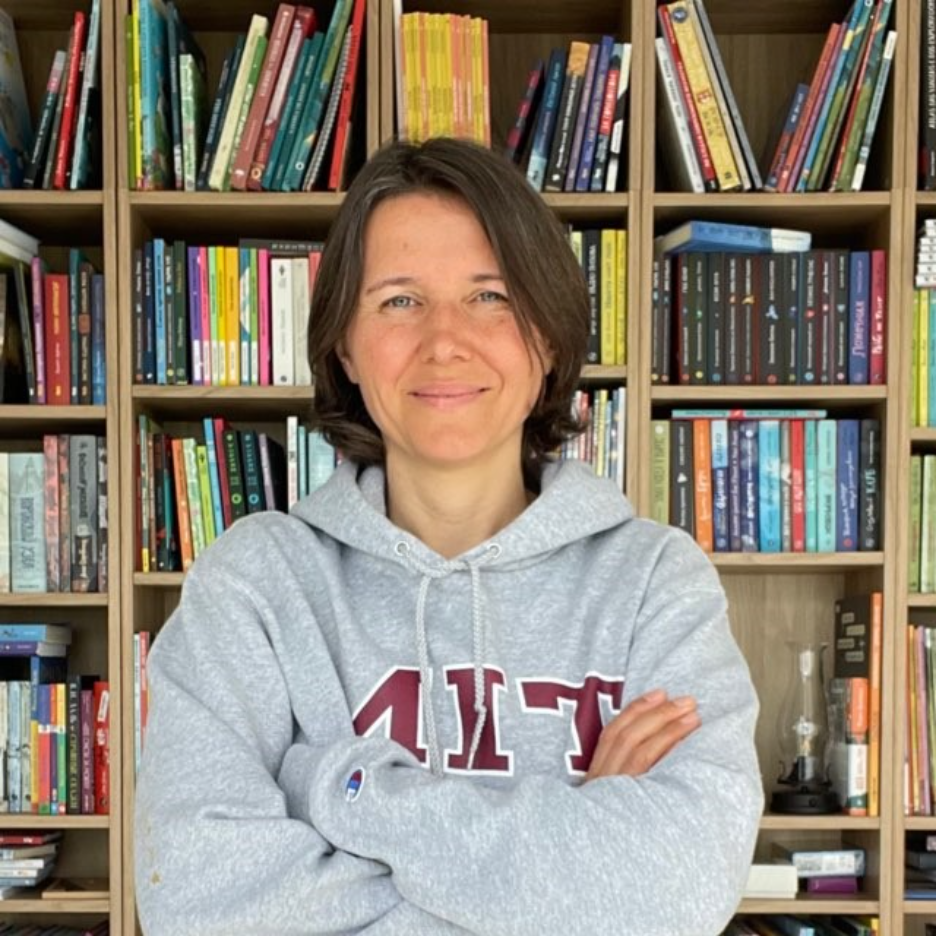
Olga Sokorova is a Lisbon-based linguist, philologist, and curator of a private children's library. A PhD researcher in childhood bilingualism at the Catholic University of Lisbon, she works with multilingual families across three languages and draws on a global network of over 150 families from Nigeria, Belgium, Madeira, and Portugal.
